-
Assistive devices via the IV
The essentials about disability insurance (IV)
- Bilateral, leg-predominantBoth legs affected
- HemiparesisOne side of the body affected
- Unilateral, leg-predominantOne leg affected
- Whole body affectedWhole body affected
- ParentsParents
An assistive device should really help in everyday life. The person who needs it knows best what makes sense, together with family and professionals. The Power-up shows you who is responsible for what: the IV decides on entitlement, while the SAHB gives practical advice and manages the assistive-device depot. In five steps, from the assessment with professionals to the fitting by an orthopaedic workshop, you learn how the process for getting an assistive device works. The Power-up also clarifies important questions about ownership and insurance, and what changes in the transition to adulthood.
What is an assistive device?
An assistive device is an object.
It helps in everyday life.
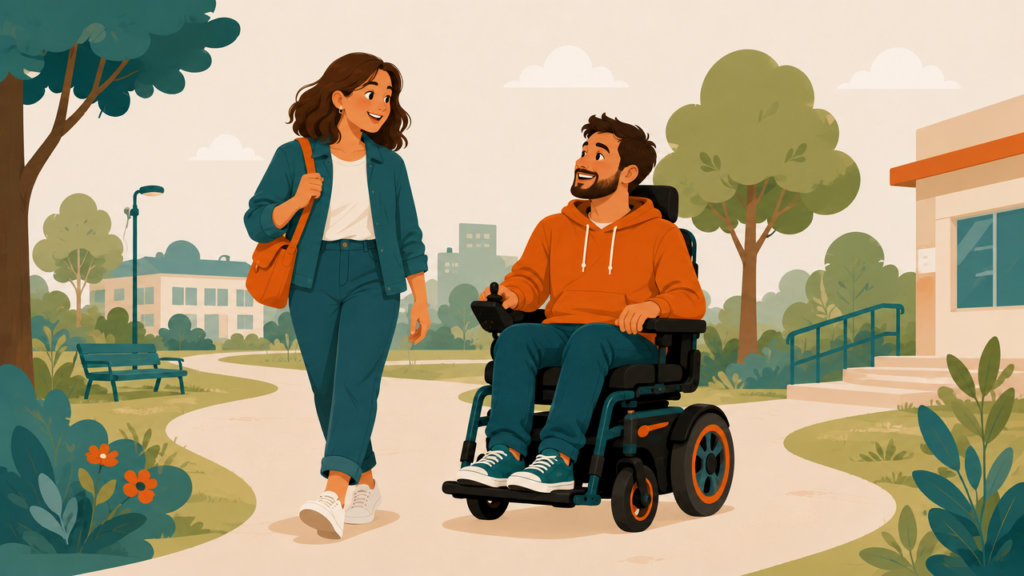
For example a wheelchair.
Or a brace for the body.The IV pays for the assistive device
The IV checks your application.
Then it sends you a letter.
The letter says: We will pay for it.
The letter is called cost approval.Wait for the letter
Do not order the assistive device too early.
Wait until the letter from the IV arrives.
Otherwise you may have to pay yourself.The SAHB gives you advice
The SAHB is a specialist service.
It helps you find the right model.
It also has a store of assistive devices.
The store is called depot.Expensive assistive devices belong to the IV
The IV buys the assistive device.
You only get it on loan.
Take good care of it.
Is something broken?
Then tell the IV.Does the assistive device no longer fit?
Then it goes back to the depot.
Another person then gets it.Tell your insurance about the assistive device
Tell your liability insurance about the assistive device.
Also tell your household insurance.
Then the insurance pays.
For example if something breaks.
Or if someone steals the assistive device.Assistive devices for adults
The IV also pays for assistive devices after the 20th birthday.
Later comes retirement age.
Then the AHV is responsible.
The AHV is the insurance for old age.
Assistive devices you already have stay protected.The IV says no? Do not give up.
Sometimes the IV says no.
That is not the end.
You can say that you do not agree.
This is called an objection.
Ask your therapist for help.
